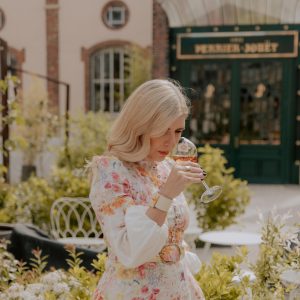
Bollinger La Grande Année Rosé 2018: Bollinger’s signature in a sun-filled vintage.
Champagne rarely gets a summer like 2018, where the region was handed months of sunshine, spotless fruit and one of the earliest harvests in living memory. For a house like Bollinger, whose style rests on ripe Pinot Noir and the texture of old oak, it was a gift. The question was never whether the grapes would ripen, but how to keep the wine lively once they had. La Grande Année Rosé 2018 is Bollinger’s answer.
2018 began wet. Winter rain soaked the chalk, building reserves the vines would draw on for months. A mild spring brought early flowering, and then the weather turned. From early summer, Champagne baked under clear skies, with long stretches of heat and very little rain.
That kind of season can be a trap. Sugar climbs quickly, acidity falls, and wines can turn heavy and short-lived. The water reserves accumulated during the wet winter helped the vines through the hot, dry summer, and the dry air left almost no rot to sort out. Picking began in the last week of August, with Pinot Noir from Aÿ and the Montagne de Reims arriving ripe, clean and full of flavour.
As always at Bollinger, Pinot Noir does the heavy lifting. It makes up two-thirds of the blend, with Chardonnay supplying the rest, and the fruit comes from 19 crus, all of them grand or premier cru.
Aÿ and Verzenay give the wine its depth and backbone, while Mareuil-sur-Aÿ adds generosity. Chardonnay from Chouilly and Cuis in the Côte des Blancs brings precision and a cooler, citrus edge, which matters all the more in a hot year.
The colour comes from 5% red wine from La Côte aux Enfants, Bollinger’s steep hillside vineyard on the edge of Aÿ. It is a site distinctive enough that the house also bottles it on its own. Here, it adds depth of fruit rather than weight.
What makes La Grande Année unusual is less the recipe than the method. Every base wine is fermented in small, aged oak barrels, a practice few large houses still keep. The old wood contributes little overt oak flavour; its importance lies instead in the gentle micro-oxygenation it permits, helping build texture and complexity.
The wine is then aged under natural cork rather than crown cap, for more than twice as long as the appellation requires, before each bottle is riddled and disgorged by hand. It is painstaking work, and it shows in the fine, creamy mousse. Dosage is a restrained 7 g/L.
The palate is where 2018’s ripeness shows, yet it never feels heavy. The red fruit is crisp rather than jammy, the texture creamy and fine, and the acidity bright enough to keep everything moving. The finish is long and savoury.
This is a rosé that wants food. Its red-fruit freshness and gentle grip suit roast duck or quail, seared tuna, salmon and lamb cooked pink. At the Sydney launch this week, it was beautifully paired with a duck galantine with rhubarb from Sydney Porcine chef, Nik Hill. It is just as happy with earthy, savoury dishes such as mushroom risotto, or a wedge of aged Comté.
It is approachable today, but this is a wine built to age. Open a bottle now to enjoy its vibrant fruit, then keep the rest for five to ten years, when the red fruit should give way to deeper, more savoury notes.
For anyone curious about what a great warm year tastes like in Champagne, made by one of the few houses still doing so much by hand, La Grande Année Rosé 2018 is a very fine place to start.
Our tip
Drink one now, cellar the rest. The vibrant red fruit is irresistible today, but in five to ten years will reveal the more savoury side of La Grande Année Rosé 2018.